
How to light a living room: four rules for cozy light
In short
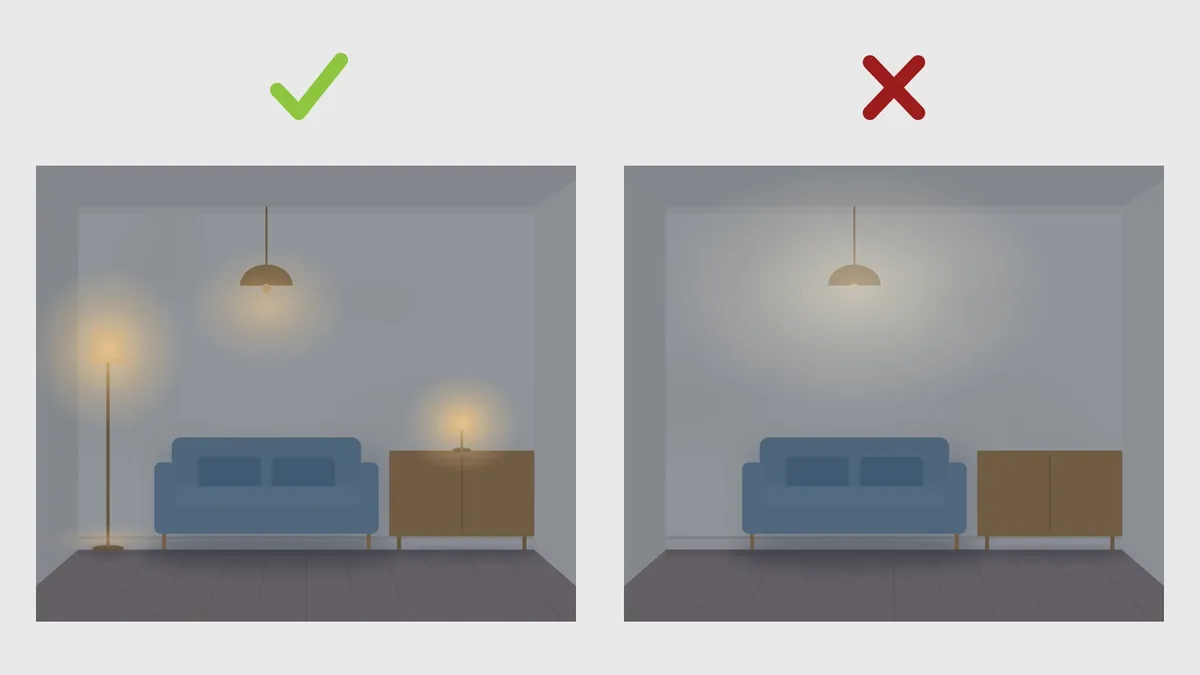
A room feels cozy when its light comes from at least three sources at different heights rather than from a single ceiling light. Create pools of light instead of lighting everything evenly, choose warm white light of around 2700 K for living and sleeping areas, and make it dimmable.
Why does a room often feel uncomfortable despite beautiful furniture? Usually it's simply the wrong light. Light determines how a room affects us and how at home we feel. Yet when planning or furnishing, we often think of it only at the very end. When we set about designing our home full of anticipation, everything usually revolves around fabrics, colors and the new sofa.
Light deserves the same attention as your furniture. Once the connections are in the wrong place, the mood becomes restless – and changing them later costs unnecessary time, nerves and money. Whether you're planning a renovation or having your apartment furnished from scratch: a good lighting concept is the heart of well-thought-out interior design.
To help you get it right, I'd like to share the most important ground rules from my interior consultations. Follow them, and any room becomes a true retreat.
How many light sources does a room need?
At least three light sources at three different heights – general light above, ambient light at eye level, accent light near the floor. A single ceiling light makes the room bright, but it often casts hard shadows and makes everything look flat and uninviting. As soon as you combine the soft light of a floor lamp at eye level with floor uplights or a small table lamp on the sideboard, the room instantly gains a beautiful, inviting depth.
Create cozy islands
Don't light the whole room evenly – create pools of light for cozy zones instead. Rather than lighting your living room like a waiting hall, play with light and shadow. A soft spotlight above the dining table or a lovely reading lamp next to your favorite armchair gives the room structure. That way you guide the eye exactly to the areas where you want to relax. How light and wall color work together is shown in Don't be afraid of dark walls.
Which light color feels cozy?
In living and sleeping areas, always go for 2700 K. Neutral white light from around 4000 K, by contrast, quickly feels like an office. Light color has a huge influence on whether our body can wind down in the evening. Warm white light of around 2700 K is reminiscent of the evening sun and radiates pure comfort. Cooler light keeps us alert, but instantly robs a room of its coziness.
Make your light flexible
Wherever possible, go for dimmable light – so it adapts flexibly from the end of the working day to dinner. After all, what you need from a room changes over the course of the day. Where you need bright general light on a dull morning, a soft glow is quite enough later in the evening to wind down with a glass of wine.
If we think about lighting as a whole from the start, you create a home that supports your everyday life. In the 3D model, we make light and its effect visible together from day one. That saves real budget and gives you reliable certainty.
If you're still unsure about your own lighting concept, let's simply test your ideas in advance, at your own pace, with a professional 3D visualization through IMAGO.